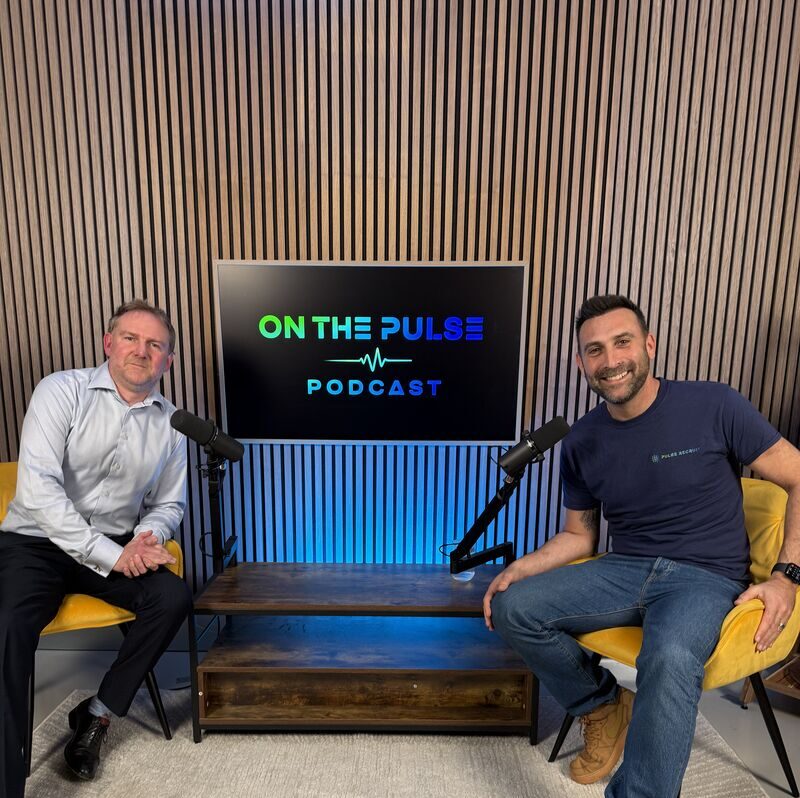
Featuring Fabrice Khullar, Director of Product, UX & Optimisation at Boots UK, in conversation with Ricky Burns on Episode 1 of On The Pulse.
Look at most senior product job specs for a retail business and you’ll see them asking for pure-tech experience, discovery fluency, and time at a B2C product company. But the product leaders who go on to define a retail business rarely fit that template.
They sound less like textbook product managers and more like savvy retailers who happen to be excellent at product.
Fabrice Khullar, Director of Product, UX & Optimisation at Boots UK, and previously a senior product leader at Selfridges, Sainsbury’s and Sky, put it almost exactly that way on Episode 1 of On The Pulse.
“The best product people in my experience in a retailer don’t necessarily sound like product people. They just sound like really good retailers, really good savvy operators who understand that business inside out.”
If you’re hiring at Head of Product, Director of Product or CPO level into a retail business right now, the gap between what’s on the spec and what actually predicts success matters more than the JD usually admits. Here’s why
The structural problem retail keeps repeating
Retail’s relationship with product has always been complicated. As Fabrice describes it, the industry has historically treated technology as a cost centre rather than a strategic capability. That made sense when the product was a SKU on a shelf and the role of tech was to keep the tills working. It makes far less sense in a world where a significant portion of the customer journey now happens on platforms the retailer doesn’t own, and where every major retailer is competing for attention with TikTok, Reddit, and increasingly with agentic AI.
The result is that most retailers have spent the last decade trying to bolt a product organisation onto a project-led tech function. McKinsey’s work on retail tech transformation makes the structural case bluntly: the future operating model needs to be organised around products and platforms, not around delivery programmes. One North American retailer that committed to that shift saw a 30-percentage-point lift in talent satisfaction and roughly a 50% increase in the speed of tech releases per year.
The cultural lag is real, though. As Fabrice points out, many retailers approached the early-stage transformation by re-badging existing roles overnight: “Anybody in our business who’s a business analyst or project manager, you’re now a product owner.” That sets up the wrong expectation of what product is meant to do, and just as importantly, the wrong template for the next external hire.
What predicts success
When we look at the senior product placements that have worked best in retail, the common thread is what Fabrice calls pragmatism.
We’d unpack it as four behaviours.
Commercial fluency. The strongest retail product leaders can hold a credible conversation with a Category Director about price elasticity, promotional effectiveness or trade fund governance, then turn around and hold a technical conversation with a data engineer about pipelines. Retail product specs are increasingly calling this out: candidates need fluency across both sides of the pricing-to-promotion lifecycle, not just one.
Time on the shop floor. Fabrice tells a great story about being in a Sainsbury’s store in a suit, testing an early version of what became Smart Shop, and being interrupted by a customer who needed help in the fruit aisle. The best retail PMs treat that as the job, not the interruption. They go and spend time in warehouses, contact centres and stores. They’re visibly closer to the operation than the framework.
Willingness to flex the playbook. “You can’t convince a room of retail marketers to do something your way because you read a great article by some great product guy in Silicon Valley,” Fabrice says on the episode. Pure-tech transplants who try to enforce purity tend to stall. The ones who succeed know when to run a discovery sprint and when to just get the seasonal trading promo out the door.
Technical depth without being a coder. With AI tooling now allowing marketers, designers and operators to vibe-code their own prototypes, product leaders who can’t interrogate the tech stack risk becoming, in Fabrice’s words, “lazy product managers” again back to writing tickets. The PMs we see winning the strongest roles right now can ask the hard technical questions and frame tech debt as a product strategy problem, not just an engineering one.
What this means for your next hire
If you’re writing a senior product JD for a retail business right now, three quick checks are worth running.
First, look at the proxies you’re using for product seniority. If they’re weighted entirely toward pure-tech, B2C SaaS or media businesses, you’ll filter out a generation of candidates who’ve earned their stripes inside retailers and grocers and would outperform on day one. The CV that doesn’t tick those boxes is often the one that lands the role.
Second, screen for influence, not just craft. Product leadership in retail is, in Fabrice’s words, largely about managing sideways. Your interview process should test how a candidate has shifted thinking in a room of senior commercial peers who don’t speak product language, rather than only assessing how they’ve shipped a roadmap.
Third, look for evidence of operational empathy. Has this person spent time in stores, in fulfilment centres, in customer service? Can they tell you what a Saturday afternoon in their last category looked like? A small question, but it filters extraordinarily well.
The wider market makes getting this right more urgent, not less. Over 90% of retailers are confronting a structural talent shortage, and the strongest candidates are off the market in 48 hours. Hiring the right profile in the first instance is one of the cheapest moves a retail business can make this year.
Listen to the full conversation
Fabrice’s appearance on Episode 1 of On The Pulse covers far more than retail hiring: the IC-to-leadership transition (when your team becomes your product), why tech debt belongs in the boardroom rather than the engineering backlog, and what AI is doing to the skills product teams need to be brilliant at.
You can hear the full conversation with Fabrice Khullar and Ricky Burns on Episode 1 of On The Pulse.
—
On The Pulse is a new podcast from Pulse Recruit. It’s a 20-episode series with leaders across Product and Technology, exploring careers, decisions and where the industry is heading. New episodes drop fortnightly.